Re-check reachability after every tumble, not only every pick.
Which visible match survives the next tumble?
This tray model separates held shapes, buried thirds, and board motion; exact physics remains source-limited.
The reserved slot protects the A plan while the third A remains near enough to surface.
First bad decision
Spend the open slot on two visible Bs while the third is buried.
- Tempting move
- Spend the open slot on two visible Bs while the third is buried.
- Why it appeals
- The pair looks ready to complete.
- Actual cost
- Tumbling can keep the buried B inaccessible after the slot is gone.
Before the next decision
Shape Jam: the four-point re-check
- Count held shapes and open slots.
- Identify the third shape’s current depth.
- Predict how a pick may cause tumbling.
- Protect one slot while any third is unverified.
Shape Jam’s opening screen
The build reached a cream-colored full-screen menu after the source advertisement. The Shape Jam logo appears above a single green Play Level 1 button. A zero coin counter and settings icon are also visible. The uncluttered state confirms a level-based puzzle with a progression currency, although we did not spend coins or open settings.
Our retained screenshot excludes the pre-roll and shows only the game. It establishes the reviewed starting point, not the content of every later level.
Pick order protects the limited tray
Two shapes match and third is buried: Clear accessible pairs only if tray cost is safe. A pair can become a trap.. Board tumbles after a pick: Re-scan shapes before choosing again. Physics changes the next best target..
How tumble physics change pick order
Shape Jam uses physical objects and constrained space. The player needs to move or release shapes so that compatible pieces clear without blocking the limited picking or landing area. Shape, orientation, and gravity can all matter: a piece that fits by color may still jam because its long side catches another object.
The useful mental model is traffic management. Every selected shape needs somewhere to go, and every cleared group should create more space than it consumes.
Begin with pieces that are already exposed and have a clear destination. Avoid pulling a shape from beneath a crowded stack unless the movement will release several others. If the game offers a limited holding zone, reserve a slot for a piece whose match appears unexpectedly.
Physics may create a new opportunity after every move, so pause briefly instead of chaining taps blindly.
The menu uses large pointer-friendly controls and a horizontal canvas. Exact level interaction was not documented on the entry screen; mouse and touch are plausible, while keyboard support remains unverified. The soft grid background and bright logo are readable, though later overlapping shapes may demand stronger attention to outlines.
We did not inspect language choices, high-contrast options, zoom, or reduced-motion settings. Players with precise-input needs should test the first level before assuming a small phone is comfortable.
The Playgama source displayed a pre-roll before the menu. The visible coin balance indicates an internal economy, but our session does not prove whether coins buy cosmetic items, helpers, retries, or something else. No purchase was made and no rewarded-ad control was tested.
The main gameplay risk is ambiguous collision. If a shape moves differently from its visual outline, planning can feel like guesswork. Good later levels should make blocked paths understandable rather than hiding rules behind repeated failures.
Shape Jam is suitable for players who like sorting puzzles with a physical twist and short level goals. It may not appeal to someone seeking pure geometry, narrative progression, or verified keyboard navigation. Try Level 1 long enough to see whether the motion creates useful cause-and-effect.
Playgama supplies the game. znvrgames independently inspected the menu on August 31, 2026 and does not claim ownership of the build. This article does not host, embed, or provide a Play control for that runtime. Ads, currency, controls, and availability may change.
Board motion can invalidate a chosen triple
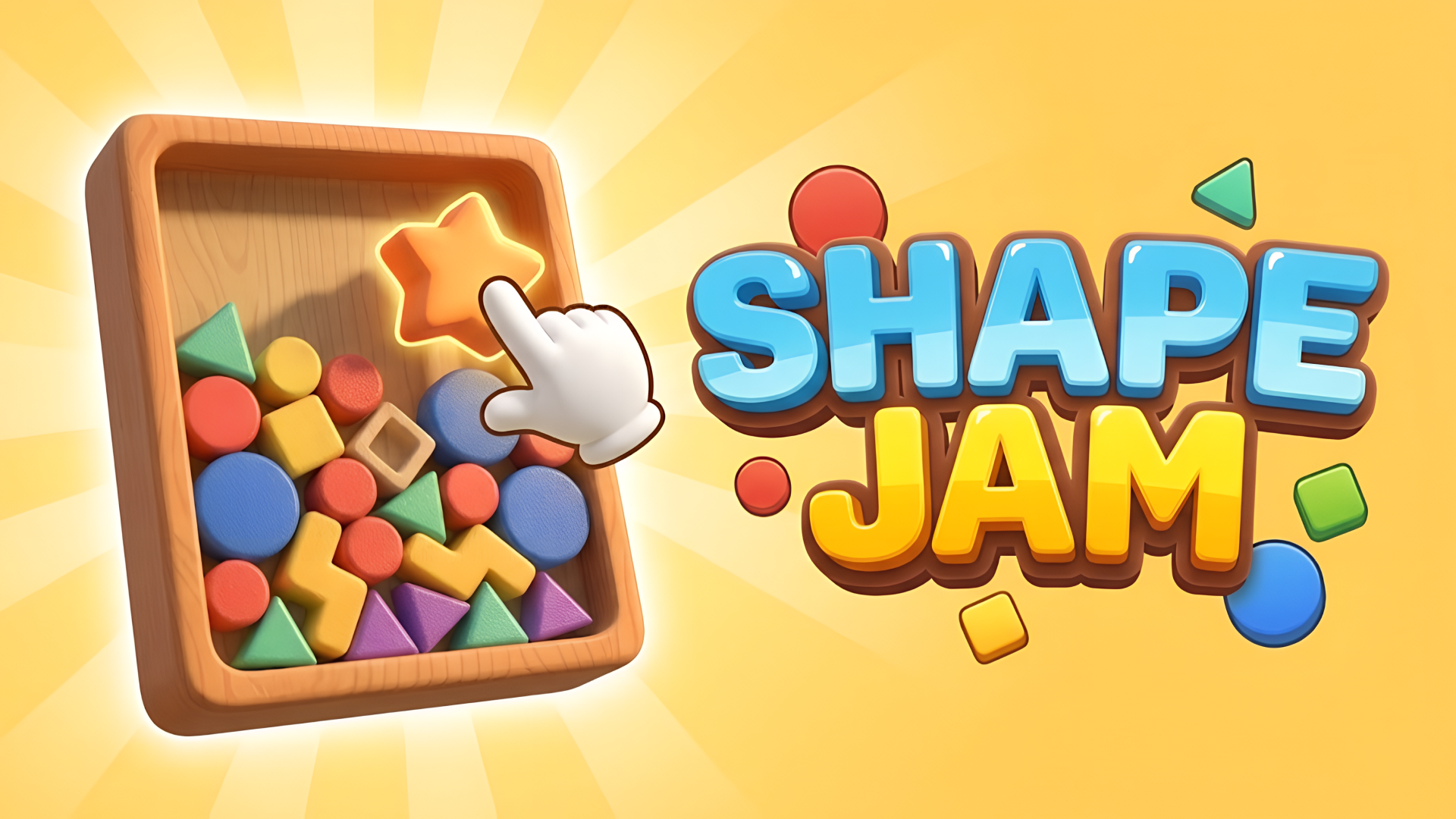
Collect three matching shapes to clear them.
Picked shapes enter limited holding slots.
Physics tumbling and pick order decide success.
Two shapes match and third is buried
Two shapes match and third is buried
Clear accessible pairs only if tray cost is safe.
A pair can become a trap.
Board tumbles after a pick
Re-scan shapes before choosing again.
Physics changes the next best target.
Count remaining slots before every pick.
- Count remaining slots before every pick.
- Prioritize shapes with visible thirds.
- Avoid holding two different pairs.
- Re-read the board after each collapse.
Prioritize shapes with visible thirds.
- Count remaining slots before every pick.
- Prioritize shapes with visible thirds.
- Avoid holding two different pairs.
Great for fast spatial triage.
Great for fast spatial triage.
Less ideal if you dislike physics ambiguity.
Shape Jam versus master of 3 tiles
Shape Jam adds a limited tray and physics tumbling before three matching shapes clear. Master of 3 Tiles defines three identical tiles as the target but does not document its tray capacity or covered-tile treatment.
Read the comparison overview →A lively shape-triple puzzle with real order pressure.
A lively shape-triple puzzle with real order pressure.
Editorial synthesis: Pick order protects the limited tray
The limited tray makes order the main resource. Taking a harmless-looking shape can occupy the slot needed for a later triple, so the page asks readers to choose moves that either complete a group or reveal a known continuation. This is more specific than calling the game a matching puzzle: it describes the tension between immediate clearing and preserving future capacity. Readers who enjoy compact planning will understand the appeal, while anyone who dislikes failure caused by one early commitment should verify the game's recovery tools first.