Keep one emergency slot for the third die.
What enters the tray before the third equal die is visible?
This constructed tray model separates confirmed pairs and unknown third touches; it does not assert captured dice rules.
The emergency slot is worth spending only when the third die’s position is more than a guess.
First bad decision
Fill the last slot on a diagonal-looking candidate before confirming adjacency or merge rule.
- Tempting move
- Fill the last slot on a diagonal-looking candidate before confirming adjacency or merge rule.
- Why it appeals
- It completes the tray and feels productive.
- Actual cost
- The true third die can become unreachable while no emergency slot remains.
Before the next decision
Dice Puzzle: the four-point re-check
- Name the third die before taking a pair.
- Preserve one slot for uncertainty.
- Check diagonal and adjacent touch rules.
- Re-scan after every board movement.
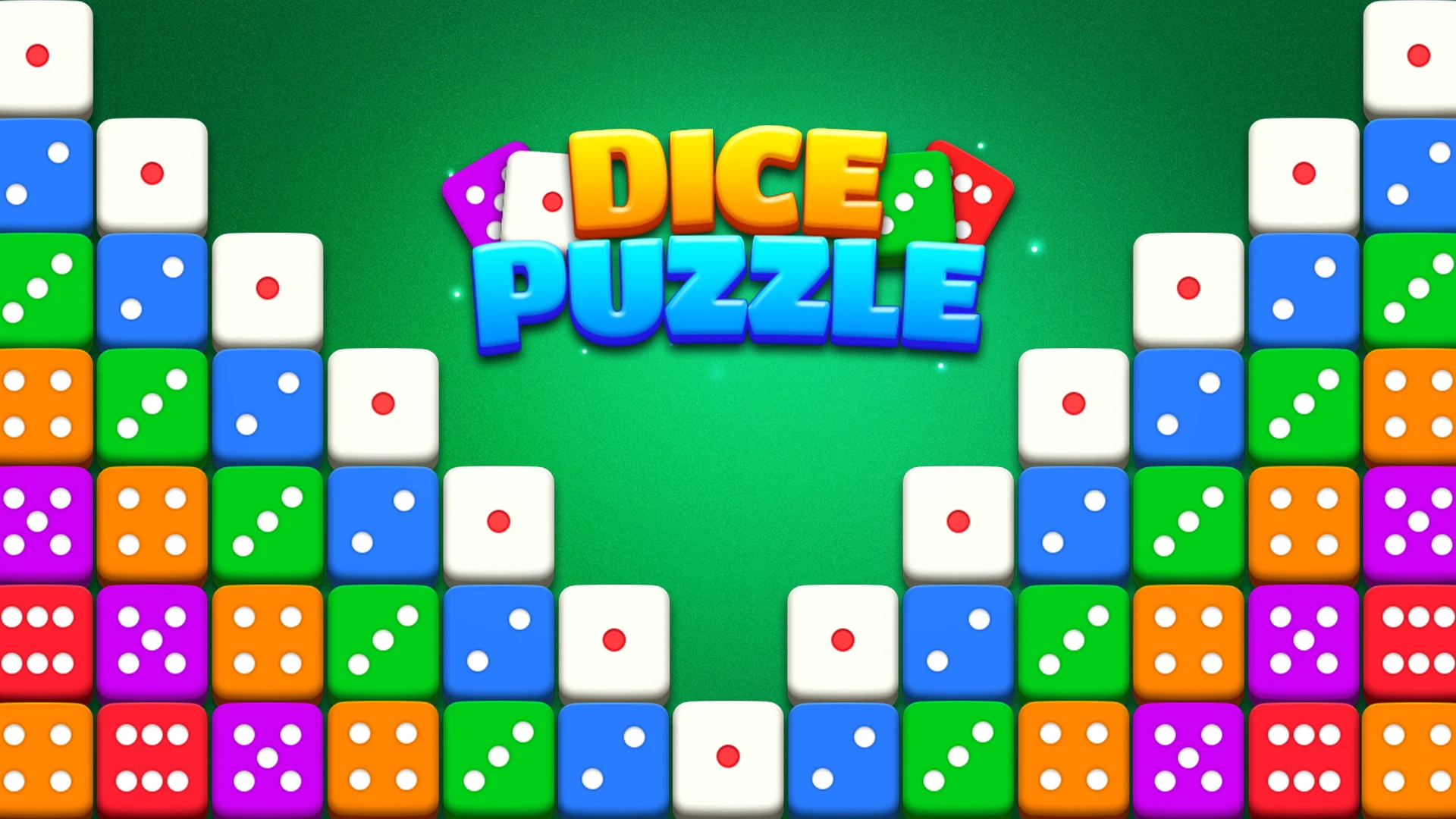
Dice Puzzle’s opening screen
The game reached a wood-textured main menu with a large Play control, a coin counter, and numbered dice used as puzzle pieces. The image saved for this page comes from the live canvas after loading. It is not a gambling-styled table: the inspected screen contained no stake, bet, cash-out, jackpot, dealer, or cash-prize language.
That difference matters because dice can describe many unrelated mechanics. Here they represent values to arrange and combine on a grid. The theme is closer to block merging than staking.
Three-touch merges demand tray discipline
Place numbered cubes so three or more matching faces touch horizontally or vertically.
The control text says adjacent diagonals also count for automatic merge; the prose otherwise emphasizes rows/columns.
Cubes appear singly or in pairs, and tray storage matters.
How tray storage enables third touches
The instructions describe a tray containing single dice or pairs. Drag a piece onto a space where it fits. Tapping a tray piece rotates it before placement, which is particularly important for pairs. When at least three matching faces touch horizontally, vertically, or diagonally, they merge into a die with a higher value.
Diagonal contact widens the set of possible chains. A piece that seems separated by the grid may still join a cluster through a corner. Before dropping a pair, count all eight neighboring positions around each landing cell.
Preserve a broad open region rather than scattering pieces into every corner. Pairs need two connected spaces, and rotation cannot help if the board has only isolated holes. Build low-value clusters near one another, but avoid sealing the center with unmatched faces.
A useful move should either complete a three-die group or improve the shape of the available space. If it does neither, place it where it can connect to multiple future values. Higher dice may be harder to match, so give them a stable area rather than moving the entire board toward one edge.
Selection, rotation, and placement use pointer or touch input. On desktop, tap once to rotate and confirm orientation before beginning the drag. On a phone, the vertical format should fit naturally, although fingers may cover the destination when positioning a pair near the bottom.
Numbered faces provide more than color alone, which helps distinguish pieces. We did not find a keyboard scheme in the inspected material. The main menu was readable without sound, but settings and audio behavior were not opened.
Use the first few pieces to create two loose neighborhoods rather than one dense wall. Reserve the center for pairs with awkward orientation. When a three-piece merge is available, check whether triggering it opens space or creates a high-value obstruction.
If the tray can be previewed, plan around the next shape. If it cannot, favor flexible placements that accept several values. A restart after an early dead end is more informative when the first five placements are deliberately changed instead of repeated quickly.
Players who enjoy number matching, compact grid management, and chain merges are the natural audience. It offers recognizable dice faces without requiring knowledge of dice games. Chance-based rolling, realistic physics, and fast action are outside its placement focus.
Parents and general visitors should still make their own age decision, but the checked presentation did not market itself specifically to children and did not show gambling activity.
A coin total was visible on the menu, yet its purpose was not tested. It may relate to cosmetics, helpers, or progression; describing it more precisely would be speculation. Playgama also delivered a pre-load advertisement before the menu, and later commercial prompts may differ by session.
The next test should enter the first board, complete several merges, verify whether rotation costs anything, and identify the fail condition. Current evidence supports only the launch state and the published placement rule. Those limits keep the numbered theme from being misrepresented as either a fully tested economy or a gambling product.
Diagonal ambiguity requires a live rule check
Two matching dice are adjacent: Place the third only where it touches both. A near-merge can waste a scarce cube.. Tray holds an awkward pair: Rotate before committing. Orientation can decide whether both cubes help..
Keep one emergency tray slot open.
- Plan for the third die, not the first two.
- Keep one emergency tray slot open.
- Prefer placements that create future contacts.
Plan for the third die, not the first two.
- Plan for the third die, not the first two.
- Keep one emergency tray slot open.
- Prefer placements that create future contacts.
- Clarify diagonal behavior in the live build.
Two matching dice are adjacent
Two matching dice are adjacent
Place the third only where it touches both.
A near-merge can waste a scarce cube.
Tray holds an awkward pair
Rotate before committing.
Orientation can decide whether both cubes help.
Good for number merging with placement tension.
Good for number merging with placement tension.
Weaker fit if ambiguous rule wording bothers you.
Dice Puzzle versus master of 3 tiles
Dice Puzzle asks three matching faces to touch before a merge, with diagonal wording conflicting across its own listing; tray space therefore matters. Master of 3 Tiles defines triples but leaves tray capacity and covered-tile rules unresolved.
Read the comparison overview →A dense cube-merge puzzle once the live merge rule is confirmed.
A dense cube-merge puzzle once the live merge rule is confirmed.
Editorial synthesis: Three-touch merges demand tray discipline
The page treats a three-touch merge as a tray-management problem, not only a matching problem. Every selected die occupies attention and possibly space, so a pair without a clear third can be more dangerous than an unsolved single. Readers are asked to name the completion path before committing and to re-evaluate after each merge. This gives the title a distinct decision profile and helps players decide whether they enjoy short arithmetic planning under a visible capacity constraint.