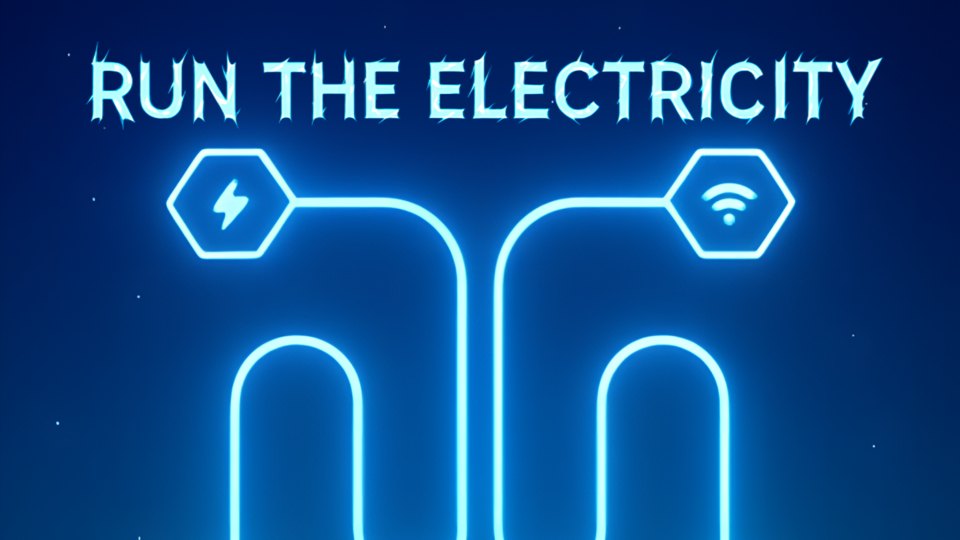
Rotate from cells with the fewest legal paths.
Which constrained piece sets the route for the rest?
This circuit model treats sources, turns, and endpoints as constraints; it is not a captured solution.
- Source/endpointFixes required entry direction
- Edge turnOften has only one legal orientation
- Straight segmentFits after turns are fixed
- Flexible centerAdjusts last
Solving the most constrained piece first prevents a center route that cannot reach the terminal.
First bad decision
Build an attractive straight run through the center before fixing endpoint directions.
- Tempting move
- Build an attractive straight run through the center before fixing endpoint directions.
- Why it appeals
- It quickly looks connected.
- Actual cost
- A terminal may require an impossible turn later.
Before the next decision
Run The Electricity: the four-point re-check
- Mark all sources and terminals.
- Find single-path edge pieces.
- Rotate constrained cells before flexible ones.
- Trace current direction, not just visual contact.
Run The Electricity’s opening screen
After the source ad was closed, the game displayed Level 1 on a dark blue gradient background. The instruction says to rotate the fragments, connect their ends, and create closed shapes. A hand points to an energy-marked connector beneath an unpowered endpoint. Settings and a key icon are visible at the top. This is a live tutorial screen and confirms the rotation-based control.
The observation supports a circuit puzzle interpretation, but it does not verify every component, key requirement, or later board size.
Trace the circuit, then place
The source describes tapping line segments to rotate them and making a closed circuit containing a lamp and connecting wire.
The current description explicitly says levels have no time limit. Claims about anxiety, meditation, or other health benefits are promotional statements and are not adopted as established outcomes here.
How circuit branches constrain placement
The player rotates wire or path fragments until open ends meet and form a closed network. In a valid arrangement, electricity should travel from a source through the connected path without ending at a loose terminal. The visual problem is local—how one tile turns—but the solution is global because every edge must agree with its neighbor.
Corners and junctions are the most informative pieces. Once their orientation is fixed, straight segments usually have fewer plausible choices.
Start from endpoints, fixed sources, or bulbs rather than the middle. An edge tile cannot point off the board unless the rules explicitly allow it, so border constraints remove many rotations immediately.
When the circuit looks complete but does not activate, inspect every connection point at high contrast. One nearly aligned curve can be easy to overlook.
The tutorial hand indicates clicking or tapping a fragment to rotate it. Large central pieces are comfortable with mouse or touch. No keyboard alternative appeared, and we did not test whether repeated key presses can rotate a selected tile.
The white wires contrast strongly with the blue background. However, players who need nonvisual feedback should not assume sound or vibration communicates circuit completion; that was not verified. We also did not inspect zoom or color settings.
The Playgama environment placed an advertisement before the game. A key icon in the upper-left may represent hints, unlocks, or collected objectives, but our session did not establish its purpose. We did not test purchases, rewarded hints, skip controls, or later interstitials.
Circuit puzzles become tedious if rotation is purely trial and error. The better approach is constraint solving: use the border and source to eliminate impossible directions before tapping.
Run The Electricity fits players who enjoy pipe puzzles, closed loops, and one-screen logic tasks. It is less suited to someone expecting a realistic electronics simulator or a story-driven game. Level 1 should quickly reveal whether the rotate-and-connect feedback is clear enough for deliberate solving.
We would revisit the page if circuit symbols, hint behavior, or the launch ad changes. A deeper test should solve several boards and confirm whether every component is required, whether loops may branch, and how the game explains an incomplete connection.
Start from endpoints whose orientation is most constrained. A corner near the edge often has fewer plausible rotations than a connector in the center, so fixing the boundary first can reduce the choices inside. After each rotation, trace one continuous path rather than checking isolated pieces. An apparent closed shape may still leave a dangling end elsewhere, and the Level 1 instruction explicitly makes closed forms part of completion.
The key icon at the top should not be assumed to be a hint, currency, or level requirement until it is activated or explained. The same caution applies to any energy symbol: it may mark a source, a target, or simply the current tutorial focus. A stronger review would record the visual difference between powered and unpowered fragments, confirm whether rotation always advances in fixed increments, and intentionally create one almost-complete loop to see how the error is signaled. Those checks matter for accessibility because success should be readable through shape or animation as well as color.
Count sources, lamps, and required branches.
- Count sources, lamps, and required branches.
- Mark cells that must remain open.
- Connect forced segments before optional ones.
- Test continuity after each addition.
An open path is not a closed circuit
In a constructed network, S connects to lamp L through A, but there is no return connection from L to S. A second segment could join L back to S.
S–A–L establishes reachability. Adding L–S establishes a loop. If the goal requires a closed circuit, reaching the lamp once is insufficient. First check the target’s connection requirement, then trace every junction after a rotation. Our six-node path guide compares route objectives; it does not model electrical behavior or claim that real-world circuit laws determine this game’s rules.
These nodes illustrate a logical difference. The exact power-source ports, branching rules, and level layouts are not specified by this example.
A short path seems obvious
A short path seems obvious
Check whether it blocks a later branch.
Electrical routes must serve the whole network.
A lamp has two possible feeds
Delay commitment until another route is excluded.
Early closure can isolate a component.
Mark cells that must remain open.
- Count sources, lamps, and required branches.
- Mark cells that must remain open.
- Connect forced segments before optional ones.
Best for logical routing and cause-effect testing.
Best for logical routing and cause-effect testing.
Avoid if you want reflex challenge.
Run The Electricity versus mirrors and rays
Both use a visible route, but Mirrors and Rays redirects light through mirrors toward targets. Rotation in a wire network changes connections; rotation of a mirror changes direction. A closed-wire rule must not be assumed for a light ray.
Read the comparison overview →A clean systems puzzle when level rules remain readable.
A clean systems puzzle when level rules remain readable.
Editorial synthesis: An open path is not a closed circuit
An open path and a completed circuit are different states. The article makes that distinction the center of its analysis because connecting a start point to a visible segment can still leave the system without a return route. Readers are asked to trace both directions, inspect the final gap, and avoid spending a flexible tile on a path that cannot close. This gives the page a durable teaching purpose even when level layouts change. It also clarifies the audience fit: the game suits people who enjoy constraint checking, while a player wanting free-form drawing may find the required closure too strict.