Score rectangles by the targets they expose, not by cell count.
Does a bigger rectangle leave better neighbors?
This arithmetic model uses only sums; it is not a captured board.
| Selection | Sum | Clear size | Neighbor result |
|---|---|---|---|
| 7 + 3 | 10 | Two cells | Can expose one hidden target |
| 2 + 3 + 5 | 10 | Three cells | May expose a better shaped gap |
| Large rectangle | 10 | Many cells | Useful only if it reveals a new sum |
The best rectangle is the one whose boundary creates another valid total.
First bad decision
Prefer a large sum-to-10 rectangle merely because it clears more cells.
- Tempting move
- Prefer a large sum-to-10 rectangle merely because it clears more cells.
- Why it appeals
- Bigger clears feel more efficient.
- Actual cost
- Its boundary may separate values that would have formed the next total.
Before the next decision
Number Merge 10: the four-point re-check
- Scan rows for obvious complements.
- Compare two-cell and multi-cell totals.
- Check the boundary after the hypothetical clear.
- Choose the rectangle that exposes another complement.
Number Merge 10’s opening screen
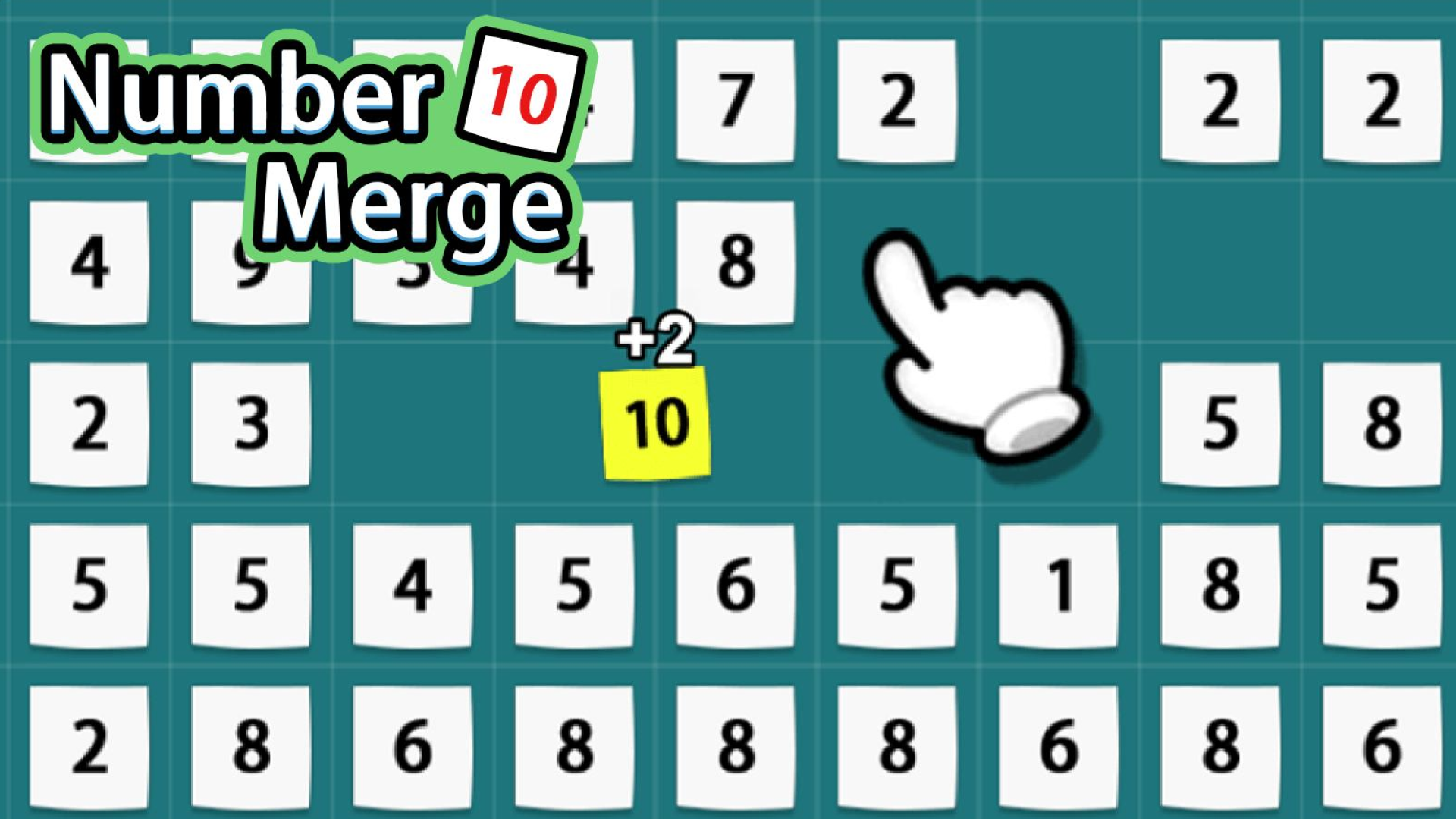
The live game opened in a portrait layout labeled Level 1. An energy value of 10 appeared at the top, with a fenced central area, a **Today's Meow** sign, a Challenge button, and a separate Skin control. The public image comes from this running screen rather than the provider thumbnail that shows a completed number grid.
The cat-related label is decorative. The described play rule is an arithmetic selection puzzle: choose a rectangular region whose values total exactly ten, causing those numbers to disappear.
Every rectangle is an addition equation
Select a rectangular area whose numbers sum to 10.
All numbers in that area clear.
The listing’s control explanation repeats the same core rule.
How rectangle boundaries define sums
Begin with obvious pairs such as 2 and 8, 3 and 7, or 4 and 6 when they can form a legal rectangular selection. A single 10 may also be useful if the interface allows a one-cell rectangle. Clear simple combinations before searching large areas.
For wider rectangles, add row values incrementally. Stop as soon as the total exceeds ten because adding positive numbers cannot bring it back down. This small calculation rule eliminates many impossible regions quickly.
Removing numbers can change adjacency or expose new lines, depending on how the board collapses. Before clearing a pair, look for another value that relies on one of those cells as part of a larger ten. Prefer the move that leaves several complementary pairs available.
Do not focus only on the smallest rectangle. A larger selection may clear more cells and create a stronger board, but only when the sum is exact. Accuracy matters more than rapid swiping, especially if the visible energy counter limits attempts.
The published rule refers to selecting an area, which normally means dragging from one corner of a rectangle to the opposite corner. The stable screen we reached did not demonstrate that gesture, so visitors should follow the loaded prompt inside the challenge. No keyboard command was shown.
The narrow vertical canvas should fit mobile screens naturally. Numbers provide a non-color signal, making the core puzzle readable without relying solely on hue. Text size inside a dense grid still needs direct testing.
Open Level 1 and scan for complementary pairs. Clear one at the edge, then observe whether remaining cells fall, shift, or stay fixed. That response determines whether planning should emphasize future adjacency or only current rectangles.
Track the energy value after a correct and an incorrect selection. If it represents attempts, avoid speculative large rectangles. If it is simply a progression resource, note how it refills before using any optional helper.
This title fits people who enjoy quick mental addition, grid scanning, and exact-target puzzles. It may help practice recognizing combinations that sum to ten, although it should not be treated as formal educational software. Players seeking action or story progression may find the arithmetic loop too focused.
The observed state showed no staking, cash-out, violence, or adult topic. The word challenge refers to the puzzle button, not a cash-prize contest.
Playgama supplied a pre-load advertisement. The function of energy and skins was not exercised, and no claim is made about how they are earned. The external build may introduce different commercial prompts over time.
Further testing should complete several rectangles, establish the collapse rule, and verify whether incorrect sums consume energy. It should also determine whether skins are cosmetic only. Current evidence supports a functioning Level 1 entry screen and a sum-to-ten rule without inventing details about rewards or later boards.
Rectangle boundaries control what clears
A two-cell pair sums to 10: Clear it if it opens useful neighbors. Small clears are reliable but may leave isolation.. A larger rectangle sums to 10: Compare its shape change with a small clear. Bigger clears can remove flexible anchors..
Draw the rectangle boundaries mentally before selecting.
- Scan rows for complements to 10.
- Draw the rectangle boundaries mentally before selecting.
- Avoid clears that isolate high-value numbers.
Scan rows for complements to 10.
- Scan rows for complements to 10.
- Draw the rectangle boundaries mentally before selecting.
- Avoid clears that isolate high-value numbers.
- Prefer clears that improve adjacent sums.
A two-cell pair sums to 10
A two-cell pair sums to 10
Clear it if it opens useful neighbors.
Small clears are reliable but may leave isolation.
A larger rectangle sums to 10
Compare its shape change with a small clear.
Bigger clears can remove flexible anchors.
Excellent for concise arithmetic-pattern play.
Excellent for concise arithmetic-pattern play.
Less suitable for narrative or action.
Number Merge 10 versus merge number up
Number Merge 10 selects any rectangle whose numbers total ten, so value combinations clear the area. Merge number up requires connected equal tiles, then refills; larger groups score more without a stated formula.
Read the comparison overview →A sharp sum-to-ten selection puzzle.
A sharp sum-to-ten selection puzzle.
Editorial synthesis: Every rectangle is an addition equation
Every rectangle is an addition equation, but the visible equation is only half the decision. The other half is where the resulting number will sit and which future rectangle it may block. The page asks readers to calculate both value and placement, which creates a durable strategy for a merge board without pretending to know every refill rule. It is a useful fit test for players who enjoy compact arithmetic and spatial planning in the same move.