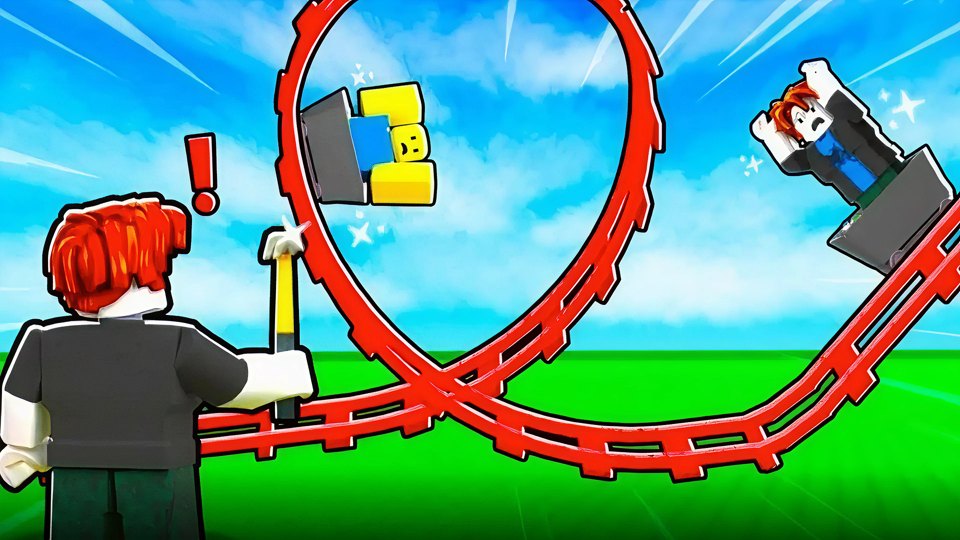
Treat the tutorial shop as part of the ride circuit, not a detour.
Where does momentum end and the next task begin?
This flow model orders track, shop, and expansion decisions; it is not a completed park build.
| Segment | Player task | Flow risk | Better sequence |
|---|---|---|---|
| Opening track | Learn steering and speed | Momentum overshoots the target | Use a short readable curve |
| Tutorial shop | Buy the first upgrade | Player skips needed income | Arrive with a clear purchase question |
| Expansion | Extend the route | New track strands the cart | Connect only after exit speed is known |
The ride grows safely only from an endpoint whose speed and direction are already understood.
First bad decision
Extend the track before understanding where the current segment releases the cart.
- Tempting move
- Extend the track before understanding where the current segment releases the cart.
- Why it appeals
- Expansion feels like progress.
- Actual cost
- The added section may inherit an unusable speed or direction.
Before the next decision
Build a Rollercoaster: Simulator: the four-point re-check
- Follow one full loop before extending.
- Name what the shop purchase changes.
- Keep curves readable at current speed.
- Expand from a stable endpoint.
Build a Rollercoaster: Simulator’s opening screen
The tested build started inside a bright, blocky 3D world. A character faced a line of tutorial arrows, and the instruction at the top said to move closer to the block shop. Currency counters, upgrade and settings icons, an Income sign, and shop buttons were visible around the edges. The screen looked more like a walkable tycoon world than a technical track editor.
That distinction is important. The first task is navigation and economic onboarding, not immediately drawing a complete coaster. We did not reach every construction tool or test a finished ride.
Track order controls risk and reward
The current source lists placing tracks by click, rotating a segment with R, moving an avatar with WASD or arrow keys, and rotating the camera with the mouse.
It describes earning currency from rides and using it for tracks, upgrades, and expansion. Prices, passive-income amounts, and “zero lag” claims are not independently verified and are not used as recommendations here.
How track order turns drops into flow
The design blends simple avatar movement, purchasing, building, and incremental income. Players approach a shop, acquire track or blocks, place a route, and use the resulting attraction to earn more currency. A successful loop should make later construction broader or faster.
Because the starting area displays an Income marker, business growth is likely as important as physical track design. The interesting decisions come from choosing when to spend, where to extend, and whether the next piece improves the ride or only consumes cash.
Follow the arrows first. Tutorial worlds often lock other actions until the introductory purchase is complete, so wandering away can make the interface feel broken. At the block shop, read the price and available balance before selecting anything. Place the earliest pieces in a simple, recoverable line until rotation and snapping are understood.
If removal or undo has a cost, small experiments are safer than ambitious first layouts. A smooth basic track is more useful than a spectacular shape that cannot connect to the station.
The full-screen view showed a third-person character and large on-screen icons. The initial image did not contain a readable keyboard legend, though desktop movement is likely based on common character controls; readers should follow the live prompt rather than assume. Camera control, placement, rotation, and mobile behavior were not fully verified.
The colorful ground and oversized arrows make the tutorial direction obvious. Dense UI along the lower-right and left edges may feel busy on smaller displays, especially if browser controls reduce the usable viewport.
The source player showed a pre-roll advertisement. An in-game button with an AD marking was also visible near the right edge, indicating an optional or gated ad feature. We did not press it. Currency and shop systems may involve only earned resources or may include further monetization; our session does not prove either way.
The game also uses a familiar block-world visual style. Players looking for engineering-grade coaster physics should set expectations accordingly. The value will depend on whether later building tools support meaningful choices beyond repeating purchases.
This title is best for players who enjoy tycoon progression, simple construction, and exploring a 3D world through an avatar. A precise CAD-like coaster designer or an ad-free build would fit this goal poorly. A fair first test is whether the shop-to-build-to-income loop feels clear after the tutorial arrows end.
The opening arrows establish a route to the block shop, so the fairest first evaluation is not whether a spectacular coaster can be built immediately. It is whether the game explains the relationship among movement, purchases, placement, and the Income sign without making the player guess. Follow the marked route once, inspect every available block before buying, and look for a preview showing position or orientation. A visible placement outline would support deliberate construction; an automatic placement would make the experience closer to a tycoon upgrade path.
A meaningful follow-up test should build one short segment, run or inspect it, and then change one variable such as height, turn direction, or track length. We would record whether that change affects cost, ride behavior, or income. We would also time how long ordinary play takes to fund the next piece and whether the ad-marked option merely accelerates that wait. Those checks are necessary before calling the system a flexible coaster builder. The current evidence supports a walkable tutorial and shop-led progression, while the depth of track design remains open.
Compare track continuity before buying length
Imagine an unfinished ride with ten connected segments and one segment facing away from the endpoint. You can rotate that segment or buy an additional straight.
Buying a straight does not repair an incompatible facing direction. First align the endpoint using the listed rotation control, then inspect whether the next segment joins the route. Separate two goals: creating a connected ride with the parts already owned, and collecting more parts. Only after the current bottleneck is understood can an extra track purchase be judged useful.
This constructed connectivity example does not prove that every owned segment can be moved, refunded, saved, or joined in a loop.
Build one segment at a time.
- Sketch drops, turns, and collection points.
- Build one segment at a time.
- Leave recovery space after fast sections.
Collectibles sit off the main line
Collectibles sit off the main line
Add a controlled curve only if speed remains manageable.
Detours should not guarantee crashes.
Descent becomes steep
Place a recovery or turn before the next drop.
Momentum compounds across segments.
Best for creative builders who accept iteration.
Best for creative builders who accept iteration.
Less ideal for purely analytical puzzles.
Sketch drops, turns, and collection points.
- Sketch drops, turns, and collection points.
- Build one segment at a time.
- Leave recovery space after fast sections.
- Ride early to catch compounding errors.
Build a Rollercoaster: Simulator versus bridge builder
Bridge Builder frames success around a vehicle crossing a designed structure. This rollercoaster listing frames progress around acquiring pieces and expanding a ride. Prefer a constrained test or a growing collection according to the task you want.
Read the comparison overview →A sandbox route-design toy with planning opportunities.
A sandbox route-design toy with planning opportunities.
Editorial synthesis: Compare track continuity before buying length
Track length is a weak measure of quality if the route breaks at a joint or cannot carry the next segment. The article instead treats continuity as the first purchase decision and length as a later optimization. That gives readers a concrete way to evaluate a simulator's early economy: does the interface make it clear why a construction choice succeeded, and can a failed segment be corrected without wasting the entire budget? These questions are more useful than a generic claim that the game is “creative,” because they connect the source mechanics to the player's actual decision burden.