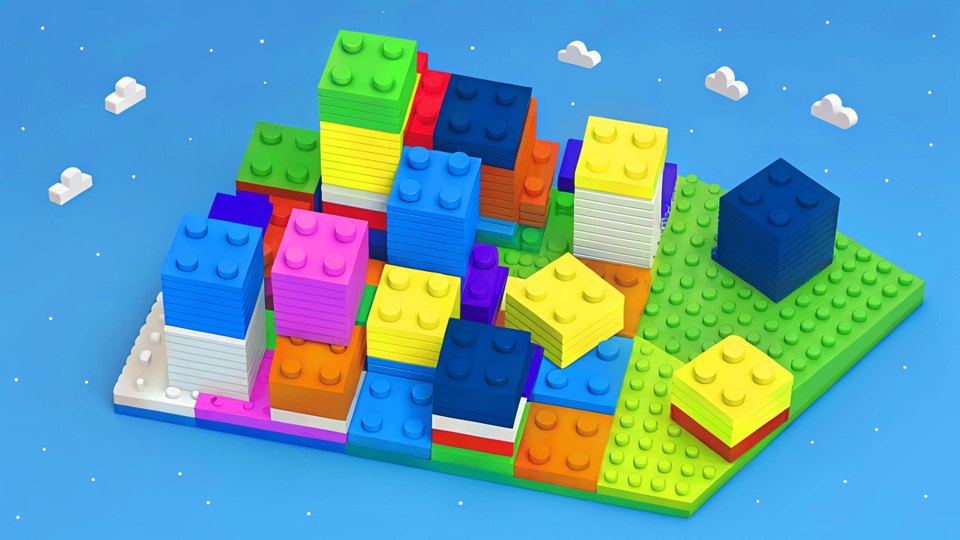
Treat adjacency as an investment, not a decorative match.
Does this grouping buy access or sell it?
The ledger uses colored blocks only as an abstract adjacency example; exact scoring remains source-limited.
| Choice | Adjacency result | Future access | Better when |
|---|---|---|---|
| Group two matching blocks now | A merge opportunity forms | May close a corridor | The third match is already visible |
| Place near a different color | No immediate merge | Keeps two exit routes | The board still needs maneuvering room |
| Build around a multiplier claim | Potential score rises | Can isolate the useful color | The live rule and payoff are confirmed |
The stronger grouping is the one that still lets you reach the next color.
First bad decision
Complete a visible pair in a way that sandwiches the only useful color.
- Tempting move
- Complete a visible pair in a way that sandwiches the only useful color.
- Why it appeals
- Matching is the stated objective.
- Actual cost
- Future access can disappear even when the current grouping is legal.
Before the next decision
Block Sort Puzzle: the four-point re-check
- Name the color needed two moves ahead.
- Check whether the grouping blocks a needed neighbor.
- Separate observed matching from unproven multiplier payoff.
- Leave one approach route to every useful cluster.
Block Sort Puzzle’s opening screen
Level 1 opened on a gray isometric playfield built from raised, stud-like spaces. Several short stacks of colored blocks occupied the board, and a hand cue demonstrated dragging a stack to another tile. The restrained geometric scene is the real running game. It replaces the much less informative marketing image for the public listing.
The first screen makes two constraints visible: stacks consume discrete positions, and color adjacency matters. A careless move can use the only helpful gap, while a thoughtful placement can bring like-colored stacks together and create more room.
Separate matching from multiplier chasing
The current instructions describe dragging blocks onto a chosen tile and placing matching colors next to each other so they combine.
Combinations increase the points multiplier; the description also emphasizes speed and tower height. It does not provide a numeric scoring formula or establish a countdown deadline.
How adjacency changes a merge’s value
The published instructions say to drag blocks onto a chosen tile and place equal colors beside one another. Matching blocks combine and increase a points multiplier. This means a move should be judged twice: first for whether it produces an immediate match, and second for whether the resulting stack still leaves a useful route across the board.
Do not assume the largest stack should always move first. A smaller group may be blocking the only tile that connects two colors. Look at the board as a set of lanes and pockets, then decide which relocation improves future access.
Empty studs are not wasted positions. They are temporary storage, turning points, and protection against a dead board. Keep at least one flexible cell near the center when possible. Moving everything toward an edge can make the middle impossible to cross; filling the center too early can split the remaining stacks into isolated zones.
When a merge raises the multiplier, resist chasing another match immediately. Pause and inspect the new stack height and nearby colors. Consecutive merges are valuable only if the board remains playable. A lower score with several open positions may be stronger than a flashy move that closes every route.
The game uses drag-and-drop input. On desktop, begin the gesture near the center of a stack and release near the center of the destination stud. This reduces accidental selection of a neighboring piece. The vertical canvas suggests a comfortable phone layout, but hand placement may obscure lower stacks during a long drag.
No keyboard controls were presented. The tutorial appeared understandable without audio, and the high contrast between colored pieces and the gray field helped object recognition. Color appears to carry important information, so a pattern or symbol option would be useful; none was confirmed in the first screen.
Start by locating every pair of matching top colors. Identify which pair can meet with the fewest temporary moves. Next, mark the emptiest area of the board and protect it. Make one merge, then recalculate rather than following a memorized sequence.
If a level stalls, restart and compare the first three moves. Changing only one move makes the cause of failure easier to see. Speed is secondary until placement accuracy and the multiplier rule are understood.
This title suits players who like spatial sorting, chain reactions, and quiet score improvement. It asks for planning without a long explanation, and the first level offers a clear visual demonstration. It may disappoint visitors who want free-form building, keyboard movement, or a story attached to the blocks.
The checked state contained no violent scene, adult theme, gambling-styled language, or child-specific instruction. Its presentation is a general-audience abstract puzzle.
At launch, a commercial screen preceded Level 1. Later advertising, rewards, and availability are controlled by that external build. We did not trigger a multiplier chain, reach failure, spend currency, or test a hint.
A fuller session should record the merge threshold, maximum stack height, scoring calculation, and recovery options. The supported finding today is that the game launches into an interactive sorting board, uses direct dragging, and makes board space central to both combination and survival.
An empty stud near the center can receive stacks from more directions than one trapped at an edge, so it should not be consumed casually. Before each drag, check whether the moved stack exposes a useful color beneath it and whether its destination creates a future match. A legal move that produces neither benefit may simply relocate the blockage.
The tutorial hand demonstrates input but not the complete combination rule. A longer session should count how many matching blocks trigger a merge, whether only top colors interact, and whether a merged stack can exceed the apparent height limit. It should also test an invalid drop to confirm that the source stack returns without spending a move. Clear feedback on that failure is essential because isometric boards can make two neighboring studs appear closer or farther apart than they are.
Separate grouping from a multiplier claim
Imagine one placement creating an immediate same-color combination and a second placement merely opening space for a possible future match.
The first action has an explicitly described scoring event: a combination that raises the multiplier. The second has potential positional value but no confirmed immediate score. If an opening move leaves several destinations, compare the next matching neighbor rather than choosing only the tallest-looking stack. Do not calculate an optimal score from an unknown multiplier formula or assume the word “fast” proves that a timer will end the round.
This comparison uses the source’s qualitative scoring description; no score, speed threshold, or record is claimed.
A merge is immediate
A merge is immediate
Take it only if the resulting stack leaves neighboring access.
The scoring event is explicit.
A move only opens future space
Treat it as preparation, not confirmed points.
Do not assume an unknown multiplier rewards it.
Compare top and neighboring colors before dragging.
- Compare top and neighboring colors before dragging.
- Preserve central tiles as turning space.
- Check stack height after each merge.
- Stop chasing points when routes become one-way.
Preserve central tiles as turning space.
- Compare top and neighboring colors before dragging.
- Preserve central tiles as turning space.
- Check stack height after each merge.
Good for tactile sorting with visible adjacency.
Good for tactile sorting with visible adjacency.
Less suitable if you require documented scoring or timer rules.
Block Sort Puzzle versus color sort puzzle
Color Sort Puzzle restricts pouring by the destination’s top color. Block Sort Puzzle describes neighboring colors combining on placement. A liquid-pouring plan cannot be transferred directly to this adjacent-block system.
Read the comparison overview →Pick it for adjacency planning; demand a live test if exact scoring matters.
Pick it for adjacency planning; demand a live test if exact scoring matters.
Editorial synthesis: Separate grouping from a multiplier claim
The page separates visible grouping from unverified multiplier language. That separation matters because a promotional listing may describe rewards without explaining the actual condition that triggers them. The independent value here is a reading discipline: first solve the board's physical constraint, then ask whether a bonus changes the decision or merely decorates the result. Players can use the same method to compare a calm sorting round with a more aggressive score chase. The recommendation is consequently about cognitive fit rather than an invented rating: choose it when arranging constrained groups is satisfying, and treat every reward claim as something to verify in the live build before planning around it.