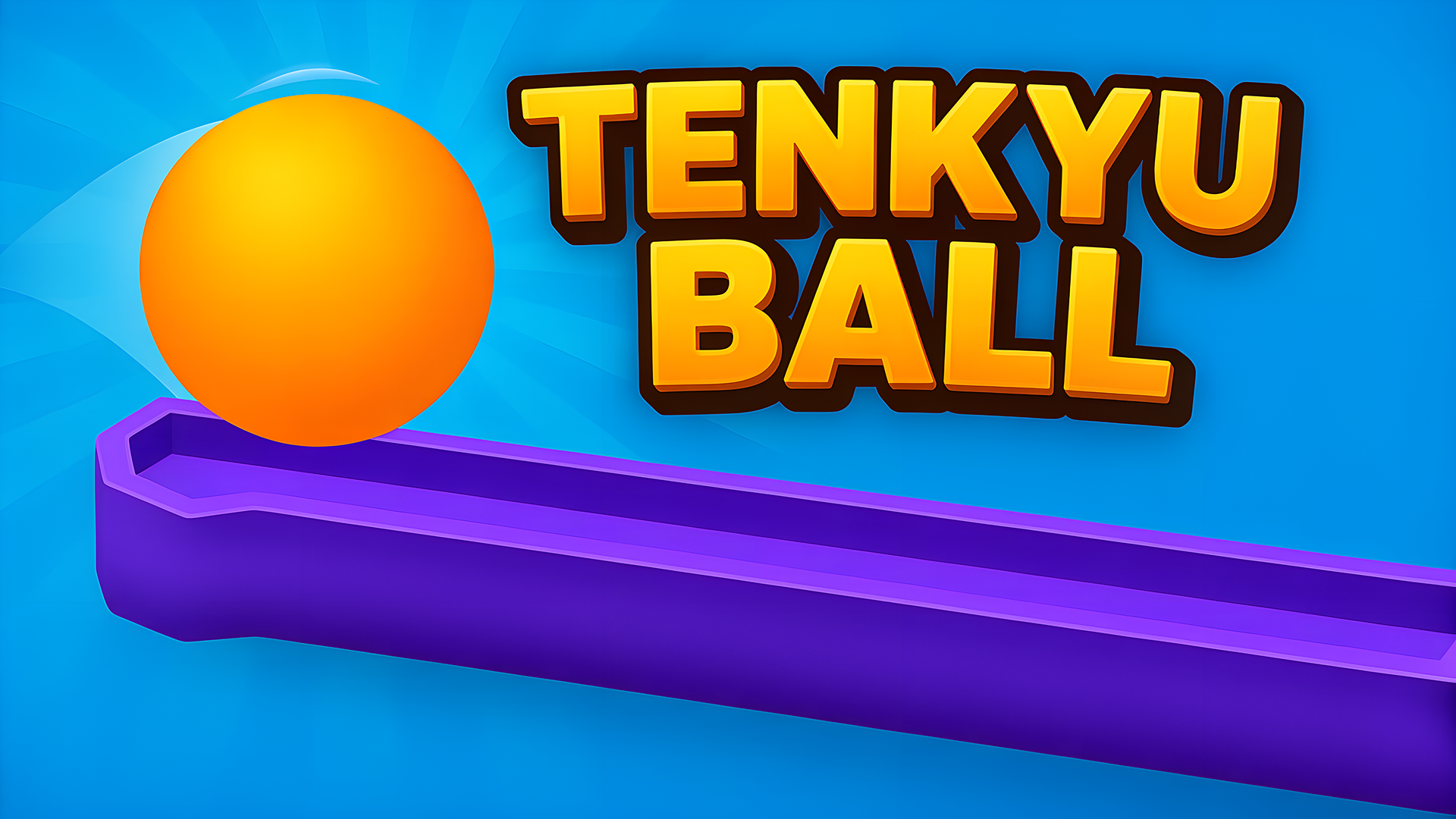
Reduce tilt before the turn, not after momentum builds.
How much fall margin remains before the narrow bridge?
This momentum model separates speed, correction distance, and fall risk; it is not a measured run.
| Phase | Tilt choice | Momentum | Fall margin |
|---|---|---|---|
| Approach | Small early correction | Controlled | Wider |
| Bridge | Level the stage | Still moving | Narrow but manageable |
| After bridge | Resume measured tilt | Depends on exit speed | Check before turning |
| Fall | Restart required | Reset | Loss of stage progress |
Early restraint preserves the correction distance that late speed otherwise consumes.
First bad decision
Increase tilt to recover lost speed immediately before a narrow bridge.
- Tempting move
- Increase tilt to recover lost speed immediately before a narrow bridge.
- Why it appeals
- It compensates for slow progress.
- Actual cost
- Extra momentum leaves too little correction distance on the narrow surface.
Before the next decision
TENKYU BALL: the four-point re-check
- Correct earlier with smaller input.
- Level before narrow sections.
- Separate speed from steering.
- Accept a slower line when fall margin is thin.
TENKYU BALL’s opening screen
The game opened to a simple cyan-and-blue title screen after the source advertisement was dismissed. TENKYU BALL appeared above a large circular play control, with sound and skin buttons underneath. The full-screen layout was clean and uncluttered, and no currency or timer was visible on that initial menu.
We did not open the skin selector, so its unlock method and any commercial behavior remain unknown. The retained evidence records only the stable game screen, not the advertisement that preceded it.
Momentum punishes overcorrection
Drag/swipe to tilt the stage and roll the ball to the goal.
More tilt increases speed; too much can cause a fall.
A fallen ball ends the level and requires a stage restart.
How tilt amount controls fall risk
Tenkyu-style play asks the player to tilt or rotate a platform so gravity moves a ball through a suspended course. The challenge is indirect control: the player changes the surface, then the ball responds with momentum. A late correction can easily become a larger mistake because the ball keeps moving after the input stops.
The most useful skill is restraint. Small, early adjustments keep the ball near the center of a lane; large reactions tend to send it across an edge.
Begin with tiny movements and observe how quickly the ball accelerates. Before each corner, level the platform briefly so momentum falls. Then tilt toward the next safe zone rather than aiming directly at the finish.
If a level rotates the entire maze visually, pick a stable screen reference so left and right do not become confusing. The safest route is often slower than the shortest route.
The menu clearly supports pointer or touch selection, but it did not provide the control map for the maze itself. Some versions of this idea use dragging, while others use directional controls; readers should follow the live tutorial. Keyboard and motion-sensor support were not verified.
The broad gradient menu was readable on desktop. During play, depth and platform edges will be more important, so a larger screen may help. Motion-sensitive players should be prepared for a tilting 3D camera and should check settings before a long session.
The Playgama launch displayed a third-party pre-roll. Inside the game, a Skin button suggests cosmetic progression, but the opening menu did not prove whether skins are earned, advertised, or sold. We did not trigger that flow.
The indirect physics can feel unforgiving. Falling near the end of a long course may require replaying earlier balance sections. We did not verify checkpoints, undo options, or later level length.
TENKYU BALL is suited to players who enjoy slow precision, rolling-ball physics, and learning by adjusting one input at a time. It is less appropriate for someone who wants fast combat, a static camera, or immediate keyboard documentation. The opening levels should be judged by whether failure reveals a specific momentum mistake.
Tilt amount changes the safe fall margin
Ball approaches a narrow bridge: Level the stage before turning. Reduced speed improves control.. Ball drifts toward an edge: Correct toward the widest nearby surface. Chasing the ideal line can worsen the fall..
Watch speed as well as position.
- Use short tilt pulses.
- Watch speed as well as position.
- Slow before gaps and turns.
Ball approaches a narrow bridge
Ball approaches a narrow bridge
Level the stage before turning.
Reduced speed improves control.
Ball drifts toward an edge
Correct toward the widest nearby surface.
Chasing the ideal line can worsen the fall.
Great for indirect-control physics patience.
Great for indirect-control physics patience.
Poor fit if instant retries feel punishing.
Use short tilt pulses.
- Use short tilt pulses.
- Watch speed as well as position.
- Slow before gaps and turns.
- Aim for recoverable surfaces.
TENKYU BALL versus rolling balls 3d
Tenkyu changes the surface: tilt controls one ball’s speed and fall, so restraint matters. Rolling Balls 3D moves a swiped group sideways and can add clones, making lane width for the whole group central.
Read the comparison overview →A clean balance-control puzzle with meaningful restraint.
A clean balance-control puzzle with meaningful restraint.
Editorial synthesis: Momentum punishes overcorrection
TENKYU BALL turns momentum into a planning constraint. Overcorrecting near a turn can be worse than taking a wider line, because the ball carries its previous movement into the next section. The article encourages readers to judge speed, turning room, and the landing surface together. That gives the game a distinct identity among rolling titles and lets the reader decide whether a physics-driven route feels expressive or merely slippery. The conclusion remains limited to the observed control model rather than claiming every course behaves identically.